How Certification Bodies Influence Random Number Sequencing Standards Across Multi-Jurisdictional Reel Networks
Jonas Schmitt · Aug 18, 2026
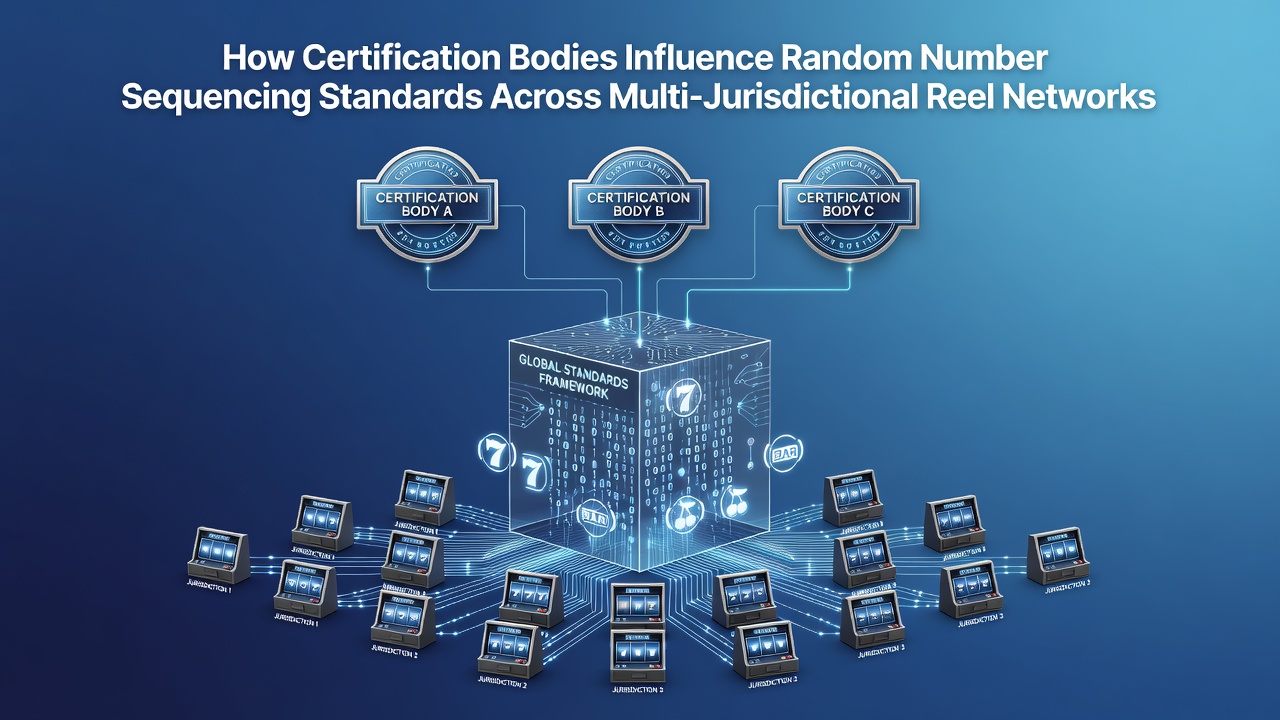
How Certification Bodies Influence Random Number Sequencing Standards Across Multi-Jurisdictional Reel Networks
Certification bodies play a central role in establishing and verifying random number sequencing standards that apply to reel networks operating across multiple jurisdictions, and these organizations conduct testing protocols that ensure compliance with varying regulatory requirements. Data from industry reports shows that entities like Gaming Laboratories International and iTech Labs evaluate algorithmic outputs against jurisdiction-specific criteria, while multi-jurisdictional operators must adapt their systems to meet each set of rules without compromising core randomness properties.
Core Functions of Certification Bodies in RNG Validation
Certification bodies examine random number generators through statistical analysis and simulation testing, and they verify that sequences meet predefined thresholds for uniformity, independence, and unpredictability before any reel network receives approval. Observers note that these evaluations occur at both initial deployment stages and periodic intervals, which allows regulators to confirm ongoing adherence as software updates or hardware changes take place. Research indicates that the testing process includes millions of simulated spins across different scenarios, and results must align with mathematical models that each jurisdiction accepts as valid benchmarks.
Jurisdictional Variations in Sequencing Requirements
Regulatory frameworks differ significantly between regions such as Nevada, New Jersey, Malta, and several Canadian provinces, and certification bodies must apply distinct parameters when assessing the same underlying technology for each market. In some jurisdictions the minimum sequence length and entropy levels receive stricter scrutiny, whereas others emphasize post-certification monitoring through real-time data feeds that operators submit to oversight agencies. According to information from the Nevada Gaming Control Board, alignment with these varied standards requires operators to maintain separate configuration profiles that certification bodies audit during each review cycle.
Adaptation Across Multi-Jurisdictional Reel Networks
Operators managing reel networks that span multiple territories coordinate with several certification bodies simultaneously, and this coordination ensures that random number sequencing remains consistent while satisfying each local mandate. Network architectures often incorporate modular RNG modules that can be tuned through parameter adjustments, and certification bodies review these adjustments to confirm that modifications do not introduce detectable patterns. Data shows that successful navigation of these requirements frequently involves centralized testing facilities where experts replicate jurisdiction-specific conditions before granting multi-market approvals.

Developments Observed in Mid-2026
During August 2026 several certification bodies released updated testing frameworks that address emerging computational methods used in reel network RNGs, and these updates reflect advances in quantum-resistant algorithms alongside traditional statistical measures. Regulators in multiple regions incorporated new evaluation criteria for sequence predictability under high-load conditions, and certification bodies began requiring additional documentation on how operators handle seed management across distributed systems. Figures from industry associations reveal that the number of cross-jurisdictional certifications processed in the first half of 2026 increased compared with prior periods, which indicates growing demand for standardized yet flexible validation approaches.
Collaboration Between Bodies and Regulatory Agencies
Certification bodies maintain ongoing communication with government agencies and industry groups, and this collaboration helps align testing methodologies with evolving legislative priorities. In practice, joint working groups review case studies from approved networks to identify areas where sequencing standards may need refinement, and resulting recommendations often feed into future certification protocols. Academic research from institutions studying gaming technology has contributed datasets that certification bodies reference during these reviews, which adds an additional layer of empirical support to the validation process.
Impact on Network Operators and Technology Providers
Reel network operators and technology providers adjust development timelines to accommodate certification cycles, and they allocate resources toward documentation and retesting when jurisdictional rules change. Providers that serve multiple markets often maintain dedicated compliance teams that track updates from each certification body, and these teams coordinate with engineering staff to implement required modifications. Evidence from regulatory filings demonstrates that early engagement with certification bodies during the design phase reduces the time needed for final approvals, while also minimizing the risk of post-launch adjustments.
Conclusion
Certification bodies continue to shape random number sequencing standards through structured testing and cross-jurisdictional coordination, and their influence extends across the technical and regulatory layers that support multi-market reel networks. As frameworks evolve in response to new technologies and regional priorities, operators and providers integrate these requirements into ongoing system management, which maintains compliance while supporting network expansion. The processes established by these bodies provide the measurable benchmarks that regulators rely upon when authorizing reel-based gaming across diverse territories.