Decoding the Mathematics Behind Reel Alignment Probabilities in Free Access Versions
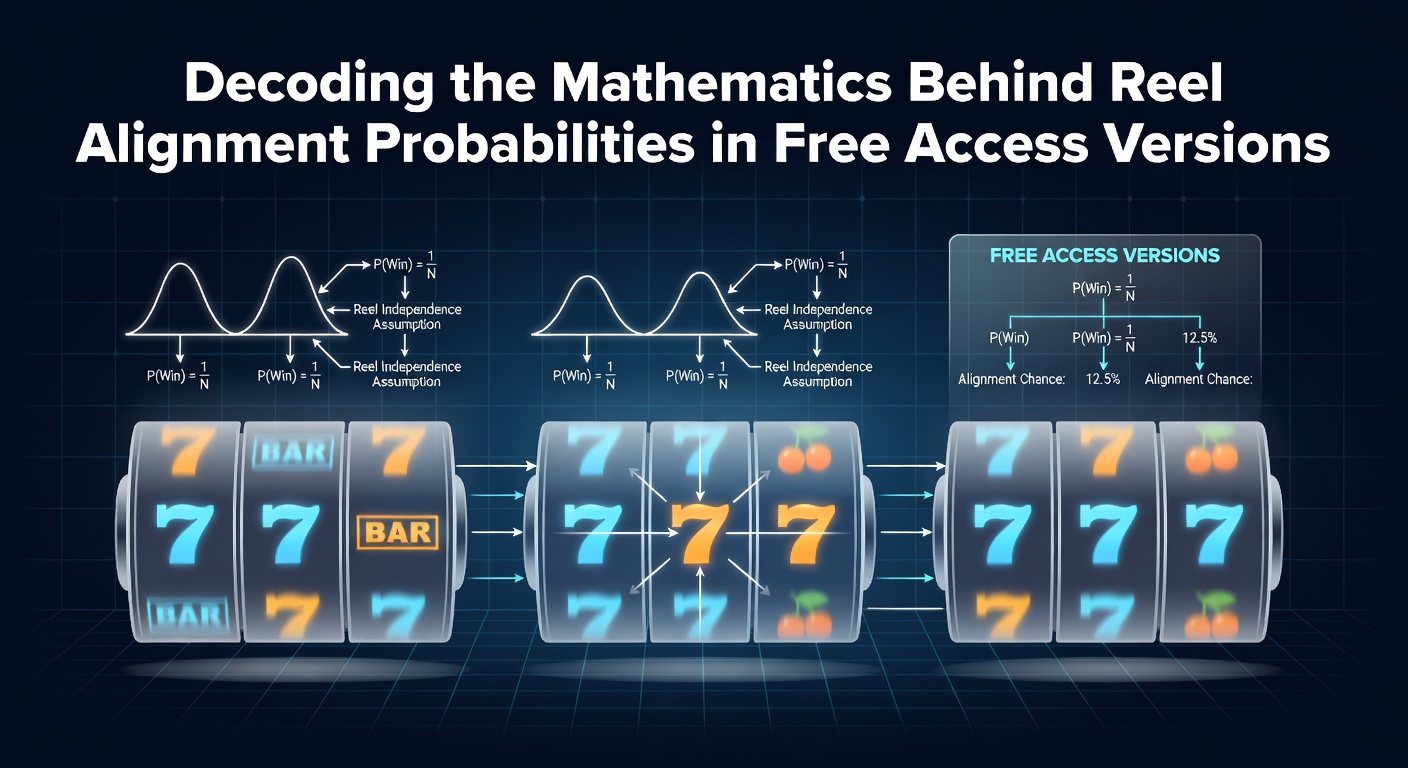
Free access versions of slot games operate on the same underlying mathematical frameworks as their real-money counterparts, which allows players to examine reel alignment probabilities without financial stakes. These versions replicate the random number generator outputs and reel strip configurations exactly, so statistical patterns remain consistent across both formats. Observers note that this equivalence stems from regulatory requirements in multiple jurisdictions where operators must demonstrate identical return-to-player percentages regardless of access type.
Reel Strip Configurations and Symbol Distribution
Each reel contains a fixed sequence of symbols arranged on a virtual strip, and alignment probabilities derive directly from how often specific symbols appear in those sequences. Data from industry analyses show that modern slots typically feature between 20 and 100 positions per reel, with weighting applied so certain symbols occupy more or fewer stops than others. Researchers calculate the total possible combinations by multiplying the number of stops across all reels, which produces the denominator for any given alignment probability. For instance, a five-reel game with 30 stops each yields 24,300,000 possible outcomes, and the frequency of a particular symbol combination determines its hit rate.
Weighting tables reveal that high-paying symbols often occupy fewer positions on early reels while appearing more frequently on later ones, a design choice that shapes the distribution of winning alignments. Studies of these configurations indicate that such imbalances create the variance players experience during sessions, yet the overall expected value stays fixed by the paytable and reel data.
Random Number Generator Mechanics in Free Access Modes
Random number generators drive every spin outcome through algorithms that map continuous number streams to discrete reel positions. In free access versions the generator functions identically to paid modes, mapping each result to the same reel strips and paylines. Figures from technical audits confirm that certified RNGs undergo periodic testing to ensure uniform distribution across the outcome space, which prevents predictable patterns from emerging over large sample sizes.
Those who analyze large datasets of free spins find that short-term sequences can deviate noticeably from theoretical probabilities, a phenomenon explained by the law of large numbers applying only across millions of trials. This behavior remains unchanged whether users access the game without cost or through monetary deposits.
Calculating Alignment Probabilities
Probability formulas combine reel stop frequencies with payline geometry to determine how often specific alignments occur. For a single payline the calculation divides the number of favorable symbol paths by the total outcome space, while multi-line games require summing probabilities across all active lines while accounting for overlapping symbol positions. Analysts employ combinatorial methods to avoid double-counting shared outcomes, which produces accurate hit frequencies for each prize tier.
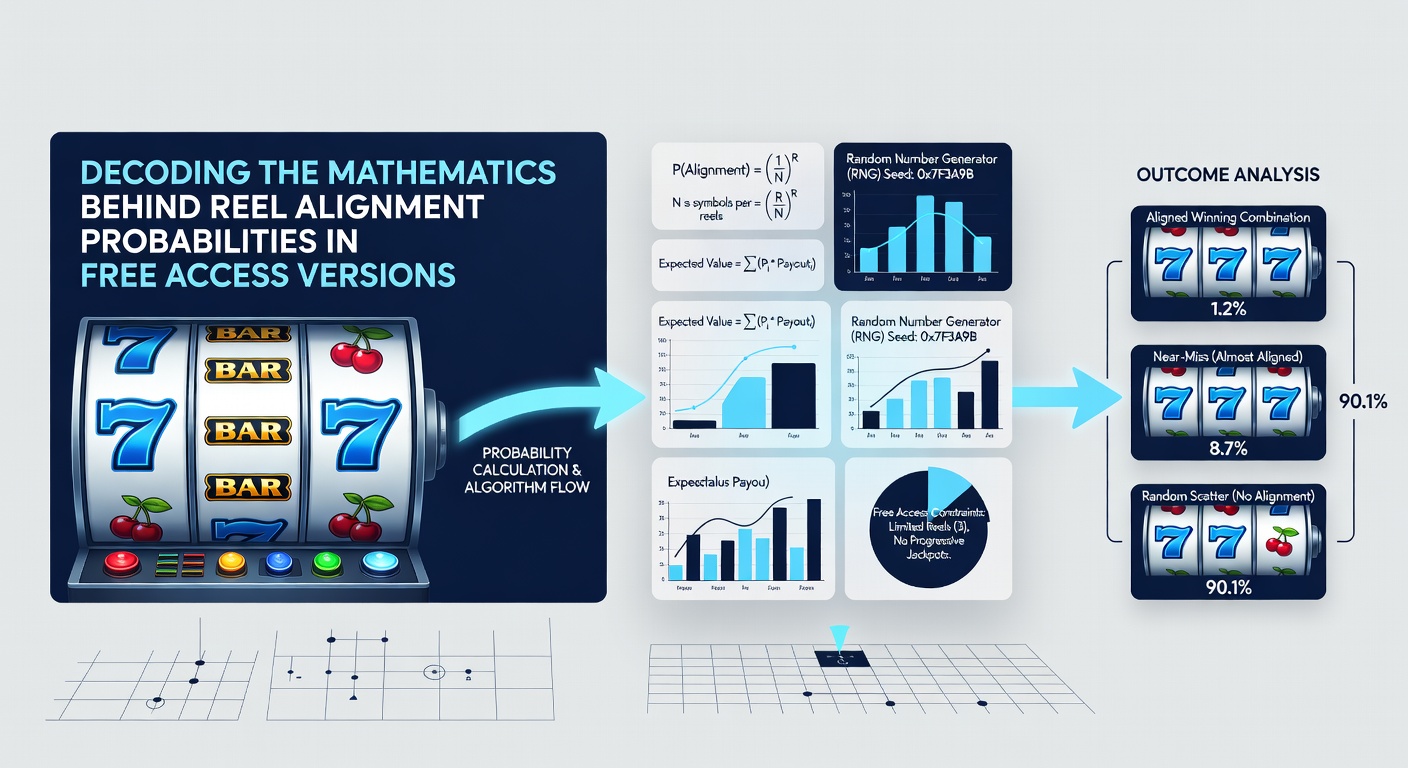
Return-to-player percentages emerge when each possible alignment's probability multiplies by its corresponding payout and the results sum across the entire paytable. Regulatory filings in regions such as those overseen by the Pennsylvania Gaming Control Board document these calculations for every approved title, providing transparent verification that free access versions match their real-money equivalents exactly.
Additional factors such as bonus round triggers follow similar probability structures, where specific symbol combinations on designated reels activate secondary features at rates defined by the game mathematics. Data collected from extensive simulation runs consistently matches the theoretical values published in certification reports.
Industry Context in 2026
As of May 2026 operators continue to expand free access libraries while maintaining identical mathematical models across all formats. Reports from research institutions highlight that this consistency supports player education initiatives, allowing individuals to study outcome distributions before engaging with real stakes. Technical standards from bodies like the Malta Gaming Authority require operators to preserve these equivalences, ensuring that free versions serve as accurate representations of full gameplay mathematics.
Academic examinations of slot probability models, including work published through various university gaming research centers, further demonstrate how reel alignment formulas scale across different game volatilities. These studies emphasize that free access environments offer controlled conditions for observing long-run behavior without external variables introduced by wagering.
Conclusion
The mathematics governing reel alignments in free access versions rests on transparent, auditable foundations that combine reel strip data, RNG outputs, and combinatorial probability. Observers tracking industry practices in 2026 note that these elements remain constant across access types, which enables precise analysis of expected frequencies and payout structures. Continued documentation from regulatory and academic sources provides ongoing verification that the underlying calculations function as designed, independent of whether users participate through free or paid channels.